authentic WWII Women’s Fiction
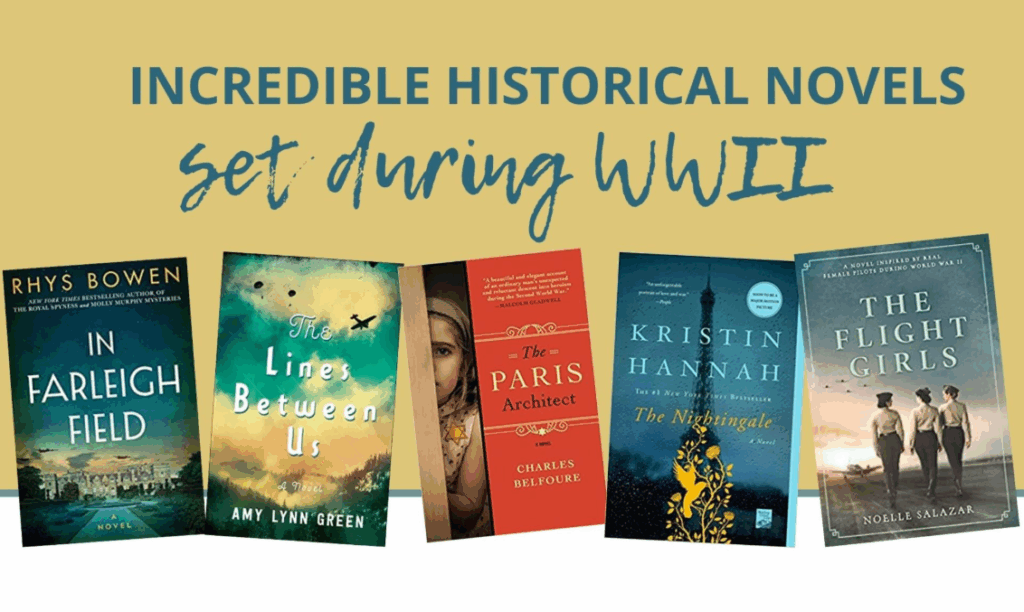
Eighty Years after the Second World War
It’s been eighty years already that the war during which my parents grew up ended. Back in May of 2020, the 75th Dutch commemoration of those who died during WWII was eerily impressive (click the link for the YouTube video); due to COVID, the Dam Square in Amsterdam was empty except for two large screens, a handful of dignitaries, and Dutch King Alexander who, for the first time in history, apologized to the Jewish people for his grandmother, Queen Wilhelmina, because “perhaps she had not done enough.” The ceremony ended with testimonies of Jewish and other grandparents telling their grandchildren about their experiences.
Women’s fiction 80 years after WWII
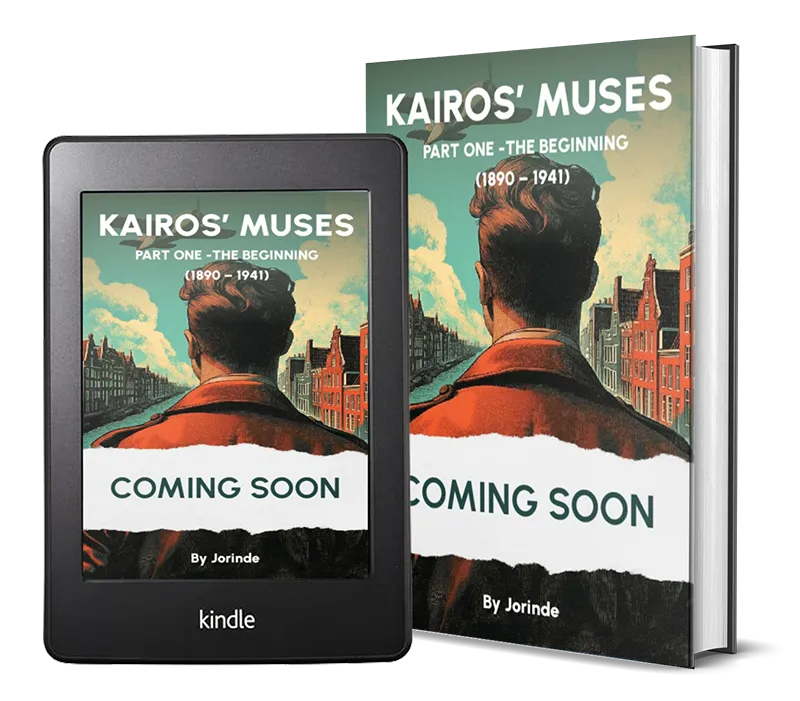
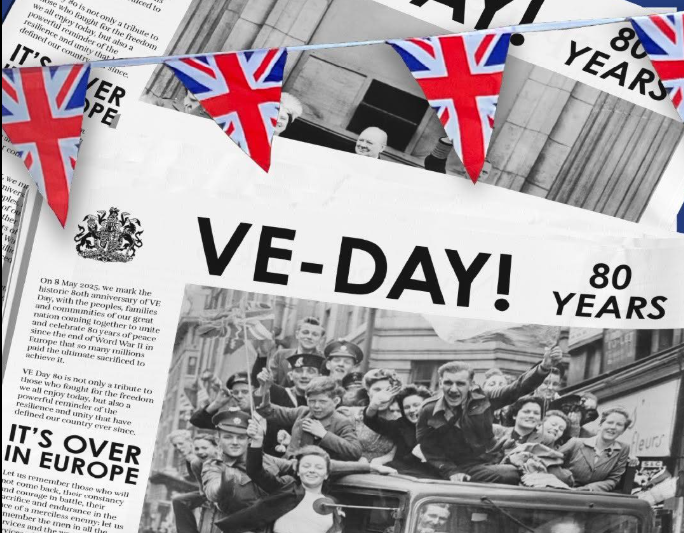
I pondered how recently, WWII women’s fiction had become trendy in the USA, and how funny it was that these stories were written by Americans. Sometimes, they were pure fantasy. Often, they were romanticized, and almost always, they were not complex enough, like history really was. I realized it was time to begin rewriting the autobiographical story of my late friend Kairos (after the Greek God of opportune timing).
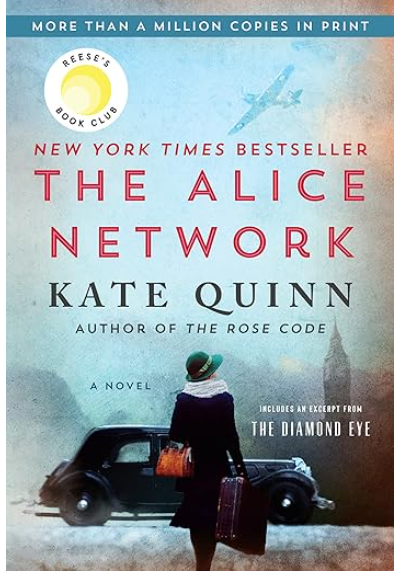
Before passing away, he had shared pictures and his life’s story that was just like the glamorized “upmarket / book club” women’s fiction that had started flooding the market. –Books like Kate Quinn’s The Alice Network, Heather Morris’ The Tattooist of Auschwitz, Kristin Harmel’s The Room on Rue Amélie, and of course, Kristin Hannah’s The Nightingale. Kairos’ story was just like one of those books.
Kairos’ story
He had to escape Amsterdam after providing an alibi to someone from the Resistance who liquidated a high-ranking Nazi. In a Nazi train, he impersonated a member of the Sicherheitsdienst, the most feared SS-branch, to escape to Paris. There, he lost his virginity to Nina, a Russian Folies Bergère danseuse, and befriended what turned out to be the infamous double-spy King Kong. Nearly freezing and dying from exhaustion, Kairos crossed the Pyrenees to end up in the notorious Puerta del Sol prison in Madrid. But before he could extract his mother’s diamonds from his fake molar as a bribe, the Dutch embassy extracted him.
From Gibraltar, a ship brought him to London, where he had a fine romance with a British girl and trained as a secret agent. His mission to parachute back into Holland was cruelly aborted when Kairos was injured by a V-bomb. Depressed, he was encouraged by Dutch queen in exile Wilhelmina to set up an American Dutch student organization. After the war, this organization enabled him to do an internship at Johns Hopkins in Baltimore, Maryland, where he fell in love with and married a pretty and smart American doctor.
The “anne Frank myth”
So far the absolutely true story of my friend Kairos, which nicely fits with the oversimplified version of history I used to believe because it was easy and entertaining. My half-German grandmother had renounced the Nazis, and her husband was in the resistance, so I grew up believing in what I call the “Anne Frank myth” – That most Dutch people were decent, brave, and helped the Jews and that all Nazis were evil.
his story did not ask questions
However, when I started doing more in-depth research to fill in some of the gaps in the stories Kairos had told me, a whole different reality revealed itself. In order to survive and not sink into depression, Kairos had completely shut himself off from everything that did not directly affect him in war-time Amsterdam. As a privileged, upper-class medical student, he -much like me- had been sheltered, pure, innocent, and gullible. As teenagers and young adults, we were conditioned to be highly disciplined, well-bred and well-read, multi-lingual nerds who only questioned life in an abstract, philosophical sense. Therefore, he had never asked himself whether the version of history (or “his story!)” was correct, and I had never asked him the right questions.
untold stories
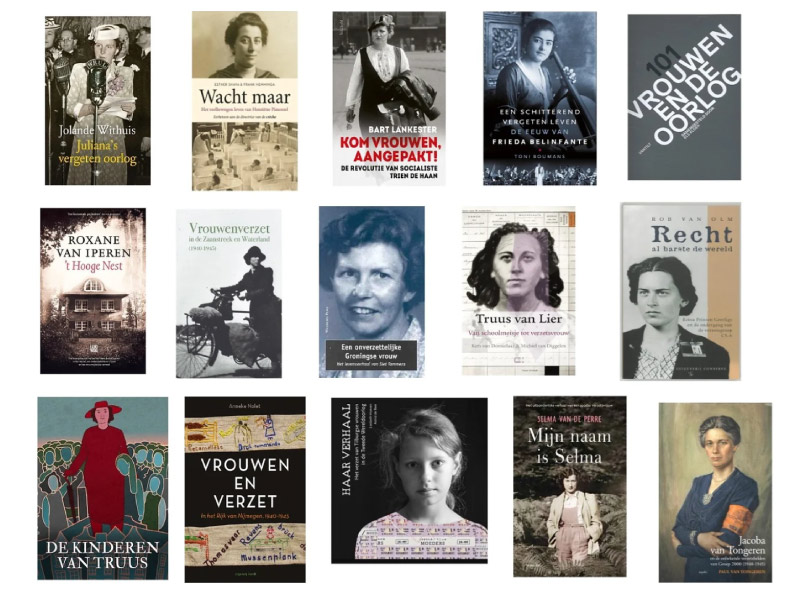
Did Kairos realize that the Comet Escape Line that helped him escape had been set up by a little-known, humble Belgian girl called Andree de Jongh? How was it possible that the Jewish Council (co-led by a former board member of Kairos’ grammar school) inadvertently helped facilitate the extermination of over 75% Amsterdam Jews? Had Kairos participated in the February Strike, the largest protest in Europe against Nazi-treatment of the Jews? Did Kairos’ mother really move in the same circles as Mies Boissevain and Truus Wijsmuller of the now famous Kindertransports? Why did not anyone know of Mrs. Wijsmuller who had negotiated with Adolf Eichmann and rescued twenty times more Jewish children than Oskar Schindler?
the banality of evil
The more research I did in Dutch, German, French, and English, the more it confirmed that mistranslation and special interests often cause historic events to be distorted or underreported. While female WWII super-heroes now abound in fiction, they are so idealized that what it was truly like these women is forgotten. What my research did more than anything is show me that the story is always more complex yet also more mundane than we think, and that evil is ordinary and hides in plain sight. Hence, we must be ever-informed, and -vigilant to actively weed out evil. The famous subtitle of Hannah Ahrendt’s Eichmann in Jerusalem is “Report on the Banality of Evil.”
evil lives in your neighborhood
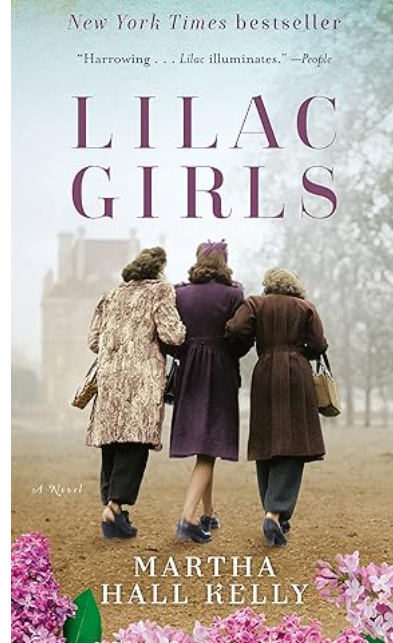
One of the few novels that gets the story right and helped me understand that Nazi evil has quite literally always been near is Martha Hall Kelley’s Lilac Girls. It hit too close to home for comfort; I grew up half an hour from the German border. The world where these evil Nazis grew up and committed heinous war crimes was where I grew up.
I was appalled when I realized that the houses of the cruelest Nazis in death camp Ravensbrück looked like the kind of idyllic family chalets of our family vacations. I “recognized” Herta Oberheuser, the only female doctor who performed medical experiments on prisoners. I knew women like her who could no doubt also go terribly wrong given a little indoctrination and lessons in “righteous” hatred. To think that she maimed people, yet got off for good behavior only five years later and even practiced medicine for another six years until a Ravensbrück survivor recognized her.
what great literature does
Being children of the war, my parents had taught me never to throw away food and never to forget. My mother told me stories about the gun pointed at her house, the glow of the burning city, the collaborator next door, how people spat at her former elementary school teacher and shaved her head because she had slept with a German, and the randomness of who lived and died. But it was not until I read Lilac Girls that I understood with my heart what she had been trying to tell me. That’s what great literature does.
To me though, that is not what the “number one best-seller in historical fiction” does (Amazon). Kristin Hannah ’s The Nightingale borrows and distorts elements from the life of Andrée de Jongh, the young woman who set up the Comet Escape Line across the Pyrenees that saved my friend Kairos’ life. De Jongh is one of Kairos’ “Muses.” Although Kristin Hannah as well as all the above-mentioned novelists are truly skillful storytellers who shine a light on important events and people in history, they sometimes attribute culturally implausible characteristics, actions, and dialog to their heroines.
Historical & Cultural Inaccuracies
These anachronisms, inaccurate (historic) details, little errors in etiquette, and minor typos in non-English words, no doubt slipped in accidentally. That is usually not because the authors did not do enough research or willfully changed history to fit their plot line. It is simply because most of these authors only did research in English and did not grow up in the countries where their novels take place, so they miss those minute cultural differences that natives take for granted.
Most of these kinds of flaws are minor and perhaps not so important in the grand scheme of things. Others are real gaffs and simply ignore important historic events. Suzanne Kelman’s A View Across the Rooftops has an interesting plot, but it also has Amsterdam protagonists eating special meals during the so-called “Hunger Winter” that caused about 20% of the population to starve.
appropriation of what’s not yours
That’s where oversimplified, inauthentic, and invented versions of history become unacceptable, and I think “stop appropriating our stories and heroes because you do not know what you are talking about!” They are wrong and do not honor the real unsung heroes enough in the way they should. Nor do some of these stories teach their readers to think, to look for the hidden causes behind the obvious reasons, or to identify dangerous patterns in history that will keep on repeating themselves if we let them.

Authentic Literature Changes Us
Therefore, I think it is important to distinguish between the two categories of WWII novels: The entertaining, somewhat historically accurate fiction that is a well-told story loosely based on a real event or person, on the one hand. And on the other hand, the kind of historically and culturally (near) accurate novels that change us from within.
They may change our perspective of history or of who we are. They may teach us about ourselves and that the greatest heroes in history are often the unsung women who quietly committed small (or grand) acts of extreme bravery for the greater good regardless of personal consequences. As my slim, simplistic novel about my friend Kairos morphed into the hefty trilogy that Kairos’ Muses is, I am hopeful that the story of all the women who helped one man survive and thrive is in the latter category. Their stories must be told, truthfully and within the context of the time and place.
discover
JOIN MY NEWSLETTER
To receive announcements about new blogs, images, essays, lectures, and novels, please sign up.